
No products in the cart.
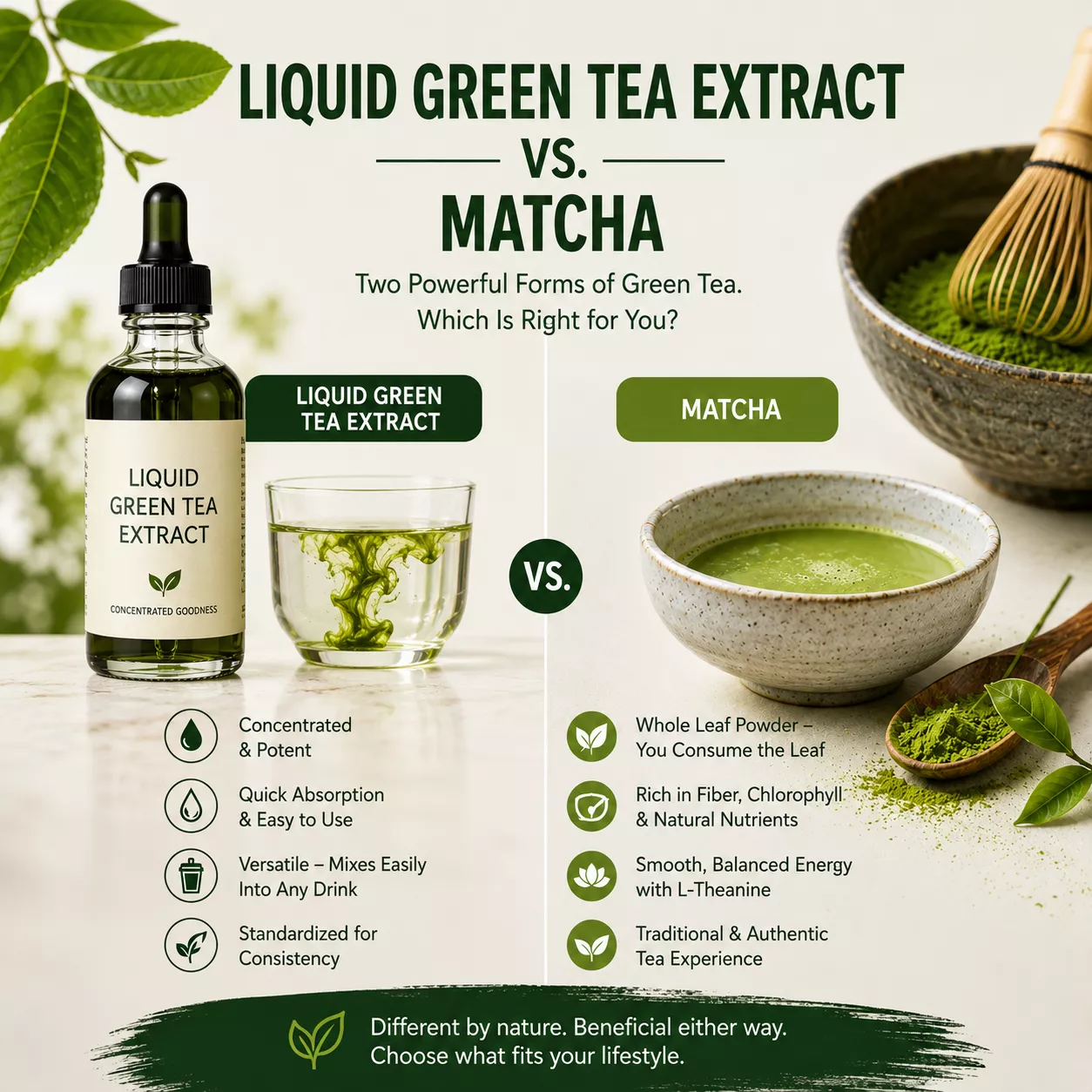
Liquid Green Tea Extract vs. Matcha: Which Has More EGCG?
Both matcha and liquid green tea extract deliver EGCG, the catechin behind green tea’s antioxidant reputation — but they are not equal. A single serving of ChiTea liquid green tea extract provides roughly 12–15 times the antioxidants of one cup of brewed or whisked matcha, with no preparation, no measurable fluoride, and a decaffeinated, solvent-free option that matcha simply can’t match.
If you’re drinking matcha for the health benefits rather than the ritual, the comparison below shows why a standardized liquid extract is often the cleaner, more potent way to get your daily catechins.
Does matcha or liquid green tea extract have more EGCG?
Liquid green tea extract delivers far more EGCG per serving than matcha, because it concentrates the catechins from many grams of leaf into a single dose.
Matcha is whole stone-ground tea leaf, so one cup gives you the catechins naturally present in about a gram or two of powder. A concentrated extract like ChiTea is standardized to 95% polyphenols and condenses the active compounds from far more leaf material — it takes roughly 60 pounds of tea leaves to produce a single pound of finished extract. The result is a serving that delivers the antioxidant equivalent of many cups of tea in a few seconds.
| Feature | Matcha (1 cup) | Liquid Green Tea Extract (ChiTea) |
|---|---|---|
| Antioxidant strength | 1x (single cup) | 12x–15x per serving |
| EGCG standardization | Varies by harvest & grade | Standardized 95% polyphenols |
| Preparation | Whisk 3–5 minutes | 5 seconds — add drops to water |
| Fluoride & heavy metals | Present in whole leaf | 0.00% (lab-verified) |
| Caffeine | ~30–70 mg per cup | Naturally decaffeinated (trace amounts only) |
| Extraction | N/A (whole leaf) | Solvent-free, water-based |
How do the ORAC values of matcha and green tea extract compare?
When it comes to antioxidant power, not all green teas are created equal — and the difference shows up clearly in their ORAC (Oxygen Radical Absorbance Capacity) values.
Matcha, being a finely ground whole-leaf tea, offers a well-rounded antioxidant profile, including not just EGCG but also a variety of vitamins, minerals, and other beneficial compounds. Its ORAC value typically lands around 1,300 per gram for ceremonial grades and roughly 1,100 for culinary.
Green tea extract, by contrast, is all about concentration. The extraction process targets the polyphenols—especially EGCG—in the tea leaf, amplifying their presence to deliver a much higher ORAC value. Standardized green tea extracts can reach ORAC values near 5,000 per gram, as cited in third-party ingredient compendia and by leading nutraceutical suppliers like Sabinsa Corporation and Taiyo International.
Here’s how that stacks up:
- Ceremonial Matcha: ~1,300 ORAC/g
- Culinary Matcha: ~1,100 ORAC/g
- Green Tea Extract: ~5,000 ORAC/g
In other words, a single gram of green tea extract may deliver 3–5 times the antioxidant capacity of a gram of matcha powder. This is why liquid extracts are the go-to for anyone looking for concentrated antioxidant benefits without the bulk.
But as with all things tea, more isn’t always better—matcha’s compound synergy may offer unique effects that go beyond raw numbers. Still, if your priority is pure antioxidant strength per serving, the concentrated extract wins by a wide margin.
Which one helps more with weight loss: matcha or green tea extract?
For weight loss support, green tea extract typically has the upper hand because of its higher levels of EGCG and other catechins, which play a key role in promoting fat oxidation and boosting thermogenesis—the body’s process of burning calories through heat.
While matcha offers metabolic support, its effects are generally milder and build gradually over time. Matcha offers modest metabolic support, making it a useful addition for those focused on long-term, steady wellness rather than quick or dramatic changes. The catechin content per cup of matcha is much lower than in a typical serving of a high-concentration extract.
Green tea extract, on the other hand, allows for consistent, clinical-strength dosing — often 300–500 mg of EGCG per day, a range found in published studies to impact fat metabolism and calorie expenditure. This concentrated potency makes green tea extract a strong choice if your goal is noticeable weight management results, especially when paired with regular exercise and a calorie-controlled diet.
Weight Management Comparison
| Factor | Matcha | Liquid Green Tea Extract |
|---|---|---|
| Thermogenic effect | Gentle & gradual | Potent & fast-acting |
| Fat oxidation | Modest | Significant |
| Appetite suppression | Mild | Moderate |
| Clinical backing | Emerging studies | Extensive published research |
In summary: If you’re aiming for a noticeable metabolic boost for weight loss, a liquid green tea extract is more likely to deliver the payoff. If you’re seeking a gentle, long-term addition to a wellness routine, matcha is a good fit — just don’t expect fast-tracked results.
What are the typical health supplement applications for matcha and green tea extract?
While both matcha and green tea extract tap into the famed catechins of Camellia sinensis, they show up in health supplements in slightly different ways—each with its own strengths.
Green tea extract, with its high concentration and stability, shines in products where standardization and easy dosing rule the day. You’ll commonly find it powering capsules (think NOW Foods, Nature’s Way), functional drink mixes, fat-burner blends, and multivitamins — anywhere precision and potency matter. Its neutral flavor profile also makes it a favorite in effervescent tabs and nootropic stacks, where you want the benefits without the taste.
Matcha, on the other hand, thrives in daily wellness rituals and beauty-forward formulas. Because it’s the whole leaf, it’s often whisked into lattes (like those at Starbucks), added to collagen beauty blends (such as Vital Proteins Matcha Collagen), or featured in detox and superfood mixes that lean into the sensory experience. You’ll see matcha popping up in ready-to-drink beverages, smoothie powders, and even snack bars aimed at people looking for a natural, easy-to-love health boost.
In practice:
- Capsules & Tablets: Green tea extract dominates for its measured dosing.
- Functional Powders & Drink Mixes: Both can appear, but extract offers higher concentration; matcha adds color and flavor.
- Ready-to-Drink (RTD) Beverages: Matcha is popular for its appeal and texture; extract is used for clear, light-flavored drinks needing standardized actives.
- Beauty & “Glow” Products: Matcha is the go-to for its natural, whole-food positioning.
- Fat Burners & Brain Support: Extract is preferred for clinical-grade consistency.
Choosing between the two largely depends on whether you want optimal dosing and potency (extract) or a more holistic, sensory-driven experience (matcha). Each has a place—it’s just a matter of whether you want the full-leaf feel or a concentrated kick.
How do the safety and recommended dosages compare between matcha and green tea extract?
Both matcha and green tea extract are generally recognized as safe when used as directed, but their safety profiles and typical serving sizes differ.
Matcha is considered gentle for most people, with typical daily servings falling between 1–2 grams of powder (about one to two cups). Because matcha delivers its catechins in a relatively mild, whole-leaf format, adverse effects are rare and usually limited to those sensitive to caffeine. For most, matcha provides a smooth, gradual energy boost without the spikes or jitters sometimes linked to higher caffeine doses.
Green tea extract, on the other hand, is a concentrated product designed to deliver high levels of catechins and EGCG in a small dose. This potency is one of its main advantages, but it also means that dosage matters—especially for sensitive individuals. Most research and international safety guidelines suggest keeping supplemental EGCG intake below 500 mg per day to minimize the risk of rare side effects such as elevated liver enzymes. Exceeding very high intakes (typically above 800 mg EGCG/day) has been associated in clinical studies and regulatory reviews (such as EFSA and the FDA) with an increased risk of liver stress.
In summary:
- Matcha is well-tolerated when consumed in traditional amounts (1–2 grams per day), making it a safe daily ritual for most.
- Green tea extract should be used with care, following recommended dosages—usually 250–500 mg of EGCG per day for adults.
- Anyone with underlying medical conditions, especially related to liver health, or those taking medications, should consult a healthcare provider before starting any concentrated supplement.
Here’s how they stack up:
| Safety Aspect | Matcha | Green Tea Extract |
|---|---|---|
| Typical serving | 1–2 g (1–2 cups) | 250–500 mg EGCG |
| Caffeine content | Mild (~30–70 mg/cup) | Low to moderate (if decaf, trace) |
| Reported side effects | Rare, mild | Rare, mostly at very high doses |
| Regulatory concern | Minimal | Noted if overused (EU, USA warnings) |
No matter your preference, start with the recommended serving, and consult third-party resources or your healthcare provider if in doubt. Always look for products with clear Certificates of Analysis (COAs) for extra safety and transparency. For the full picture on limits, interactions and who should be cautious, see our guide to green tea extract safety, dosage and side effects.
How do matcha and liquid green tea extract compare in taste?
If you’ve ever sipped a matcha latte or sampled a green tea supplement straight from the bottle, you’ll know: these two forms of green tea taste very different.
Matcha is famous for its vibrant, grassy flavor and creamy umami undertones. Its signature profile—equal parts sweet, vegetal, and satisfying—makes it a favorite for lattes, smoothies, and even desserts. The higher the grade, the milder and more well-rounded the taste, with premium ceremonial varieties prized for their natural sweetness and almost silky finish.
Liquid green tea extract, by contrast, wears its concentration on its sleeve (and your palate). By isolating and amplifying catechins like EGCG, it also concentrates bitterness and astringency. This can create a sharper, more intense bite that lingers on the tongue—pleasant for the purist looking for potency, but often best when blended into smoothies or flavored water.
Here’s how they stack up, tastewise:
- Matcha: Smooth, grassy, rich in umami, and naturally sweet when high quality.
- Liquid green tea extract: Noticeably bitter, with a sharper aftertaste and astringent finish.
Versatility matters too:
- Matcha’s balanced flavor adapts beautifully to all sorts of recipes and rituals—think lattes, baked goods, or traditional tea ceremonies.
- The extract’s bold potency is perfect for those seeking a quick health boost with minimal fuss, but it’s usually paired with other flavors or diluted to mask the pronounced bitterness.
In the end, if your goal is a sensory delight—something you’ll look forward to drinking—matcha is the tried-and-true choice. For maximum catechins without the taste, reach for a liquid extract and mix accordingly.
How do the price and availability of matcha and green tea extract compare?
If cost and sourcing are on your mind, there’s a notable difference between matcha and green tea extract — especially when you zoom out to bulk buyers and product makers.
Green tea extract is usually more budget-friendly and easier to source at scale. Its pricing is consistent, and it’s widely produced, so whether you’re making supplements or stocking a wellness bar at your local gym, extract is simple to source and won’t break the bank. This cost stability is exactly why extract powers so many capsules, gummies, and functional beverages on the market.
Matcha, on the other hand, is another story. Prices swing wildly depending on quality and harvest—think ceremonial-grade matcha from Uji or Shizuoka, which can fetch ultra-premium prices, versus culinary-grade matcha you might whisk into lattes or desserts. Even at entry level, matcha can cost several times as much per kilogram as the highest-quality extract. Availability is another factor: specialty grades and single-origin matchas are often limited in supply, and securing large, consistent batches can be tough without advance contracts.
Here’s a quick snapshot:
Product Grade Average Cost/kg Global Availability Ceremonial Matcha $90–$160 Limited Culinary Matcha $40–$70 Moderate Green Tea Extract $20–$45 Widely available If you’re prioritizing affordability and predictable supply, green tea extract is the clear winner. But if your brand or personal use is all about artisan tradition and premium taste, matcha’s higher cost may be worth the investment. Either way, your needs and budget should point you toward the best fit for your daily ritual (or your next big batch).
Is matcha or green tea extract better for cooking and recipes?
In the kitchen, matcha and liquid green tea extract play very different roles.
Matcha’s culinary appeal
Chefs and bakers prize matcha not just for its antioxidant boost, but for its deep green hue and signature umami flavor. The powder blends seamlessly into baked goods, ice creams, lattes, smoothies, and sauces, adding both color and a subtle earthiness that pairs especially well with dairy or vanilla. Culinary-grade matcha is a favorite for recipes thanks to its balance of cost, color retention, and smooth, mellow taste—even after gentle heating.
Green tea extract: functional, not flavorful
Liquid green tea extract, on the other hand, is all about potency, not sensory delight. While it’s perfect for boosting antioxidant content in nutrition bars, capsules, or gummies, it tends to deliver noticeable bitterness and doesn’t hold up well under heat. If you’re tempted to add green tea extract to a drink or baked recipe, you’ll likely need a strong flavor like citrus, chocolate, or a touch of monk fruit to mask its intensity.
Which to choose?
- Choose matcha for recipes where taste and color matter: think lattes, cakes, cookies, or vibrant sauces.
- Reach for liquid green tea extract if you want a health boost in products where flavor and appearance take a back seat—protein bars, supplements, or fortified beverages.
Ultimately, if your goal is a beautiful, flavorful end product, matcha is the go-to choice for culinary creativity. If it’s pure function you’re after, extract can deliver, as long as you don’t mind working around its assertive taste.
Why does whole-leaf matcha contain fluoride?
Because matcha is the entire ground tea leaf, it carries whatever the plant absorbed from soil and water — including fluoride and heavy metals.
The tea plant (Camellia sinensis) is a known fluoride accumulator, drawing the mineral up from the soil and storing it in its leaves. When you whisk and drink whole-leaf matcha, you consume those compounds along with the catechins. A water-extracted concentrate isolates the beneficial polyphenols while leaving contaminants behind — which is why ChiTea’s lab reports show 0.00% fluoride and pesticide residue. Read more in our guide to fluoride in green tea.
Is liquid green tea extract more bioavailable than matcha?
Yes — a liquid extract is already dissolved, so the catechins are absorbed faster without the digestive steps powders and capsules require.
Bioavailability is how much of a compound your body actually absorbs and uses. With matcha powder or capsules, your body first has to break down plant cellulose or a gelatin shell before the EGCG becomes available. A liquid extract skips that step entirely — the antioxidants enter your system in a form that’s ready to absorb. We break the science down further in the science of liquid bioaccessibility.
Can you get matcha’s benefits without the caffeine or the whisking?
Yes — a decaffeinated liquid extract delivers the same EGCG benefits with none of the jitters or the preparation.
Matcha lovers often cite the calm-energy effect of L-theanine paired with caffeine, but the antioxidant benefits come from the catechins, not the caffeine. A solvent-free, decaffeinated extract gives you the EGCG and polyphenols on their own — ideal if you’re caffeine-sensitive, drinking it in the evening, or simply tired of whisking powder into clumps. Just add a few drops to water, juice, or a smoothie.
Which is the cleaner source of antioxidants?
A standardized, water-extracted liquid concentrate is the cleaner choice for anyone focused on purity and potency over ritual.
Matcha is an excellent whole-food tea with a centuries-old tradition. But if your goal is the highest concentration of clean EGCG per serving — verified free of fluoride, pesticides, and solvents — a lab-tested liquid extract wins on purity and convenience. Explore the evidence in our Research & Science Library, or see the difference for yourself with Ultimate Green Tea Extract.
Frequently asked questions
Is liquid green tea extract better than matcha?
For antioxidant potency and purity, yes. A liquid extract delivers 12–15 times the antioxidants of a cup of matcha per serving, is standardized to 95% polyphenols, and is lab-verified free of fluoride and pesticides. Matcha remains a great traditional tea, but the extract is the more concentrated, convenient source of EGCG.
How much EGCG is in matcha versus green tea extract?
A cup of matcha provides the catechins from roughly one to two grams of leaf powder. A concentrated extract condenses the polyphenols from far more leaf — about 60 pounds of leaves yield one pound of extract — so a single serving delivers the antioxidant equivalent of many cups of tea.
Does matcha have fluoride?
Whole-leaf matcha can contain fluoride and heavy metals because the tea plant absorbs them from soil and water and stores them in its leaves. Since you consume the entire ground leaf, those compounds come with it. A water-extracted concentrate isolates the polyphenols and leaves contaminants behind.
Is green tea extract more bioavailable than powder?
A liquid extract is already dissolved, so catechins absorb quickly without your body needing to break down cellulose or a capsule shell first. This makes liquid concentrates one of the most bioavailable forms of EGCG.
Can I take green tea extract without caffeine?
Yes. A decaffeinated, solvent-free liquid extract delivers EGCG and polyphenol benefits without the caffeine (99.9% removed), making it suitable for evening use or for anyone sensitive to stimulants.
Can you use green tea extract and matcha together?
Yes — combining green tea extract and matcha can be a smart way to harness the benefits of both, as long as you keep the dosage in check.
Blending matcha with a liquid green tea extract offers a synergistic approach: you get matcha’s full-spectrum, whole-leaf nutrition and calming taste, plus a boost of concentrated antioxidants from the extract. This strategy is often used in ready-to-drink (RTD) beverages, functional powders, and capsules. The result? Clean energy, enhanced mental clarity, and a potent antioxidant profile — all in one formula.
How to combine them safely
If you’re experimenting with both, moderation is key. Too much EGCG or caffeine can be taxing on the liver or cause jitters, especially if you’re sensitive or new to green tea supplements. Start with a smaller amount of extract (think 10% or less of your total blend by weight) and monitor how you feel. It’s always wise to check product labels for exact EGCG and caffeine content, and to look for lab-tested sources free of contamination.
What to consider
- Flavor: Matcha’s mellow, grassy flavor helps balance out the sometimes-bitter taste of concentrated extract.
- Label transparency: Blends should specify EGCG, caffeine, and ingredient percentages so you know what you’re getting.
- Compliance: If you’re formulating a product, ensure it meets regulatory guidelines for safety and dosing (for example, as set by the FDA or EFSA).
Combining matcha and extract lets you enjoy the “best of both worlds”—traditional tea enjoyment with clinically validated potency. Just tailor the ratio to your needs, and prioritize purity and accurate labeling at every step.
Should you use both green tea extract and matcha—or pick just one?
You don’t have to choose sides. Some people enjoy combining the best of both worlds: the tradition and flavor of matcha with an added boost from a concentrated green tea extract. This approach offers a practical way to enjoy the full, ceremonial profile of whole-leaf matcha while boosting your EGCG intake for maximum antioxidant power.
If you decide to blend them, moderation matters. Both matcha and extracts can contain significant amounts of active compounds, and combining high doses could lead to too much caffeine or EGCG—which may cause side effects like restlessness or liver strain for sensitive individuals. Start small, especially if you’re new to green tea supplements, and always check the actual content of EGCG and caffeine in your chosen products. Read labels carefully, and if in doubt, consult with a healthcare provider.
Here’s how people typically combine the two:
- Morning ritual: Enjoy a traditional cup of matcha for its flavor and calming L-theanine, then add a measured dose of liquid extract to your water or smoothie for a potent polyphenol lift.
- Formulated blends: Some products mix matcha with a controlled percentage of extract to deliver targeted antioxidant benefits, commonly found in powders, capsules, or ready-to-drink beverages. Make sure labeling is clear about the extract ratio and overall content.
- Personalized dosing: If you want a gentler experience or mindful energy without overstimulation, use a lower extract strength alongside matcha, or alternate between them throughout the week.
The bottom line: matcha upholds the heritage and enjoyable taste, while a liquid extract delivers concentrated, rapidly absorbed catechins. Used wisely together, they can be a complementary—and potent—strategy. Just keep portions balanced, listen to your body, and prioritize transparency in sourcing and formulation.
Pingback: How to Use Liquid Green Tea Extract - ChiTea.net