
No products in the cart.
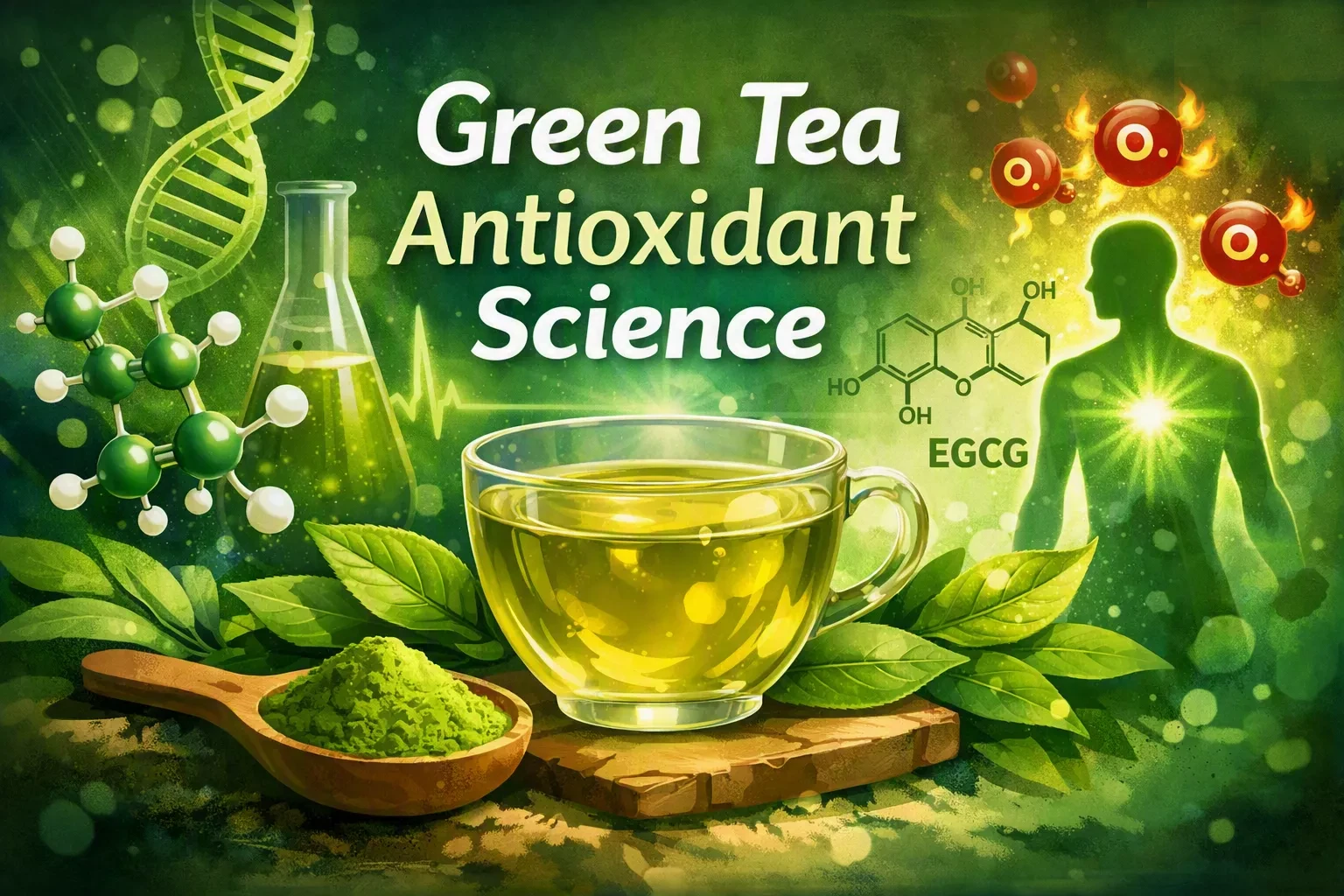
Green Tea Extract Antioxidants: What the Science Says
In short: Green tea extract concentrates the same antioxidants found in green tea — catechins, led by EGCG — into a standardized dose. These compounds help the body manage oxidative stress, and decades of research have made them among the most studied plant antioxidants. Here is what the science actually says, in plain terms.
What are the antioxidants in green tea extract?
The antioxidant power of green tea comes from a family of polyphenols called catechins. The headline compound is EGCG (epigallocatechin gallate), the most abundant and most researched, joined by EGC, ECG, and EC. A quality green tea extract is standardized so that each serving delivers a known amount of these catechins — the purity and potency principles set out in our guide to the science of green tea extract — something a brewed cup can never promise, because the dose changes with every steep.
How catechins and EGCG work
Everyday metabolism produces unstable molecules called free radicals. In excess, they contribute to oxidative stress — an imbalance between those reactive molecules and the antioxidants that keep them in check. Catechins like EGCG act as antioxidants in two broad ways: they can directly neutralize certain free radicals, and they appear to support the body’s own antioxidant enzyme systems. That combination is why EGCG is a mainstay of antioxidant research. We cover what oxidative stress does at the cellular level in our piece on free radical damage and cellular health.
What the research shows
Green tea catechins are among the most investigated dietary polyphenols, with a large body of laboratory, animal, and human studies exploring their antioxidant activity and broader effects on cellular and cardiometabolic health. The consistent, well-supported theme is their role in managing oxidative stress. Beyond that, findings are promising but still developing, and effects vary with dose, individual differences, and study design. The honest summary: strong antioxidant credentials, with other benefits an active and evolving area of study rather than settled fact.
Why an extract, not just a cup
You can absolutely get catechins from brewed green tea — but the amount is modest and inconsistent. A standardized extract concentrates them, so a single small serving can match the catechins of several cups, at a dose you can actually rely on. For anyone using green tea specifically for its antioxidants, that predictability is the point. The production steps behind that consistency are covered separately in how green tea extract is made — and a liquid format is absorbed faster than a capsule, as we cover in the science of liquid bioaccessibility.
Getting the most from green tea catechins
Catechins are delicate: heat, light, oxygen, and time all wear them down. To keep your extract potent, store it as directed, keep it sealed, and use it within its recommended window rather than letting a bottle linger. Avoid stirring it into very hot liquids, which can degrade EGCG. A fresh, well-made liquid extract — like the Ultimate Green Tea liquid extract — is designed to deliver those catechins reliably, serving after serving.
Frequently Asked Questions
What antioxidants are in green tea extract?
The main antioxidants are catechins, a group of plant polyphenols. The most studied and abundant is EGCG (epigallocatechin gallate), alongside EGC, ECG, and EC. Green tea extract concentrates these catechins far beyond a typical cup of brewed tea.
What does EGCG actually do?
EGCG is a potent antioxidant that helps neutralize reactive molecules called free radicals and supports the body’s own antioxidant defenses. Researchers study it for its role in managing oxidative stress, which is the imbalance between free radicals and antioxidants in the body.
How can I protect the antioxidants in green tea extract?
Catechins degrade with heat, light, and time. Store your extract as directed, keep it sealed, use it within its recommended window, and avoid adding it to very hot liquids. A fresh, well-stored product preserves more active EGCG.
This article is for general education and is not medical advice. Talk to a healthcare professional before starting any supplement.
Leave a Reply
You must be logged in to post a comment.