
No products in the cart.
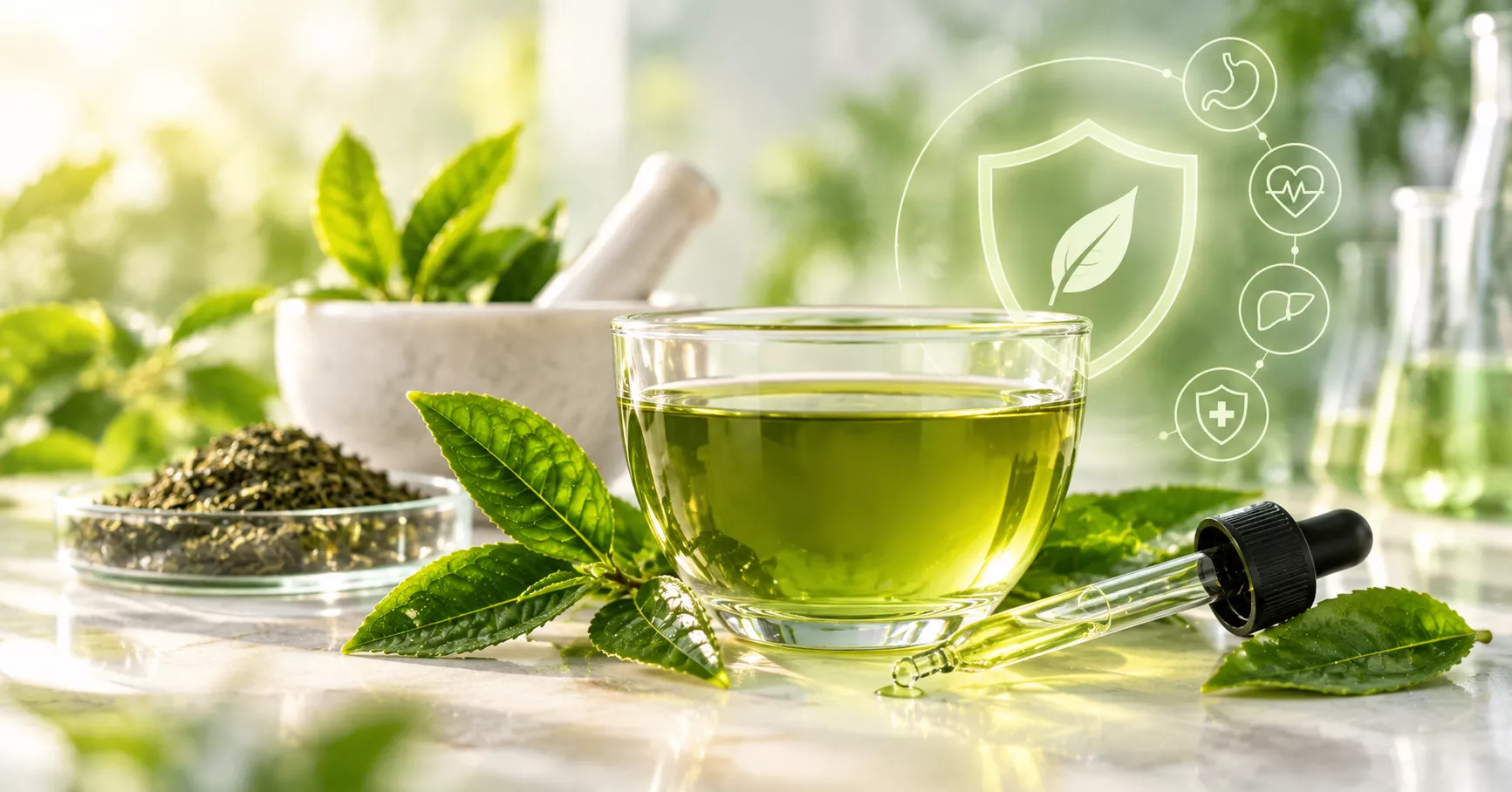
Is Green Tea Extract Safe? Side Effects & Dosage
Short answer: For most healthy adults, green tea extract is considered safe at sensible, label-directed doses — especially taken with food. The cautions worth knowing are simple: don’t overdo the dose, don’t take it on an empty stomach, and check with a professional if you have a health condition or take medication. Here is the clear, no-hype rundown.
Is green tea extract safe?
Green tea has been consumed for centuries, and a standardized extract concentrates its catechins into a reliable dose. Used sensibly, it has a good safety profile for healthy adults. The purity and standardization of the product matter too, which we cover in our guide to the science of green tea extract. Safety is mostly a question of dose and how you take it — a reasonable daily amount with food behaves very differently from a large dose on an empty stomach.
Common side effects
Most reported side effects are mild and tied to two things: caffeine and taking it without food. They can include jitteriness, difficulty sleeping if taken late in the day, a faster heartbeat in caffeine-sensitive people, or stomach upset and nausea on an empty stomach. Taking your extract with a meal and keeping it away from bedtime resolves most of these for most people. One clarification worth making: the caffeine-related effects above apply to green tea extracts that retain caffeine. The Ultimate Green Tea formula is caffeine-free (99.9%), so jitteriness, a raised heart rate and late-day sleep disruption are not concerns with it.
The one caution worth taking seriously
In rare cases, very high doses of concentrated EGCG have been associated with liver problems, and the risk appears higher when taken on an empty stomach. This is not a reason to fear green tea extract — it is a reason to respect the dose. Stay within the amount on your product label, avoid stacking several EGCG sources at once, and take it with food. Used that way, this concern is very uncommon.
How much is safe?
Follow your product’s recommended dose and start at the lower end. With EGCG, more is not better — higher intakes increase the chance of side effects without added benefit. If you use other supplements, check that you are not doubling up on green tea catechins from multiple products. For the practical side — how many drops, when to take them, and what to mix them with — see our guide to using liquid green tea extract every day.
Who should be cautious
Some people should check with a healthcare professional first, or avoid it: those who are pregnant or nursing, anyone with a liver condition, people who are sensitive to caffeine, and anyone taking medications that could interact. This is not about alarm — it is basic due diligence that applies to most supplements.
The short version
A sensible dose, taken with food and water, earlier in the day, from a product you trust. Chi Tea’s standardized liquid extract is built for exactly that kind of measured, consistent dosing, and its third-party Certificate of Analysis is published in full.
Frequently Asked Questions
Is green tea extract safe?
For most healthy adults, green tea extract is considered safe at sensible, label-directed doses, especially when taken with food. The main cautions involve very high doses, taking it on an empty stomach, and individual sensitivity. If you have a health condition or take medication, check with a healthcare professional first.
What are the side effects of green tea extract?
Most side effects are mild and relate to caffeine or to taking it on an empty stomach: jitteriness, trouble sleeping, or stomach upset. Rarely, very high doses of concentrated EGCG have been linked to liver issues, which is why staying within the recommended dose and taking it with food matters.
How much green tea extract is safe per day?
Stay within the dose on your product label rather than stacking multiple sources. More EGCG is not better — higher intakes raise the risk of side effects. Starting at the lower end and taking it with food is the safest approach.
Who should avoid green tea extract?
People who are pregnant or nursing, those with liver conditions, anyone sensitive to caffeine, and people on certain medications should be cautious or avoid it unless a healthcare professional advises otherwise. When in doubt, ask your doctor.
This article is for general education and is not medical advice. Talk to a healthcare professional before starting any supplement.
Pingback: Green Tea Extract vs Matcha | ChiTea