
No products in the cart.
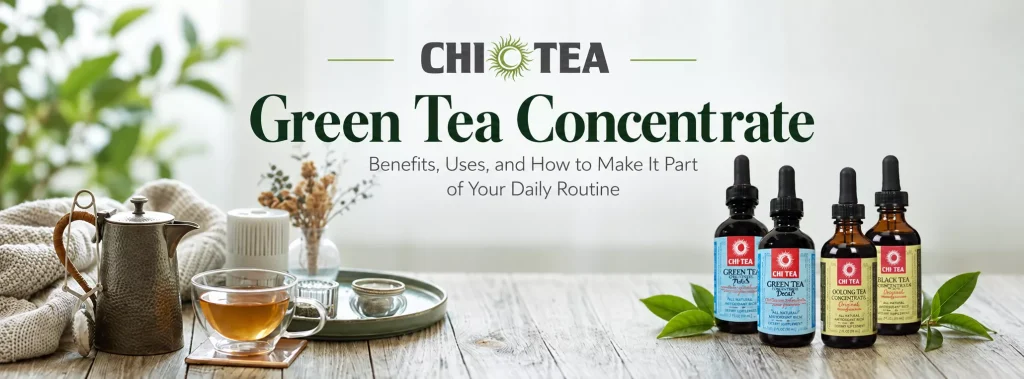
A green tea concentrate is a highly concentrated liquid or soluble extract produced by extracting active polyphenols—primarily epigallocatechin gallate (EGCG)—from fresh green tea leaves. It delivers a standardized dose of antioxidants in a small volume, with better solubility and more precise dosing than traditional brewed tea or dried powders.
What Is Green Tea Concentrate?
Green tea concentrate is a specialized liquid or purified extract that isolates and standardizes active green tea polyphenols—most notably epigallocatechin gallate (EGCG)—into a high-density, easily dispensable matrix.
Unlike conventional brewed green tea, which steeps dried leaves in hot water for several minutes to yield a mild infusion, a concentrate undergoes a delicate extraction process designed to capture the plant’s valuable phytonutrients. Fresh Camellia sinensis leaves contain a rich spectrum of natural compounds, including catechins, flavonols, and trace minerals. However, standard home brewing extracts only a fraction of these active catechins, producing a beverage whose strength varies wildly based on water temperature, steep time, and leaf quality.
To create a liquid concentrate, processors extract these bioactive compounds at scale, removing bulk plant fiber and water while preserving the structural integrity of key antioxidants. High-quality concentrates utilize a pure steam-water extraction process rather than harsh chemical solvents like ethanol or ethyl acetate. This clean processing yields an extract rich in total polyphenols and EGCG while keeping the ingredient deck exceptionally clean.
Compared with raw plant material, a liquid concentrate represents a technological evolution in how we consume Camellia sinensis. Instead of drinking four to six large mugs of hot tea every day to get a meaningful dose of polyphenols, a consumer can add a few concentrated drops directly to a glass of water. To explore the foundational chemistry behind these active plant compounds, read more about the science of green tea extract.
How Does a Green Tea Concentrate Differ From Powders and Capsules?
A liquid green tea concentrate offers rapid solubility and customizable drop-by-drop dosing without capsule shells, synthetic fillers, or insoluble leaf powders.
When evaluating green tea supplements, consumers typically choose among three formats: liquid concentrates, encapsulated dry extracts, and whole-leaf powders (such as matcha). Each format delivers nutrients differently, but liquid concentrates offer specific advantages in purity, solubility, and dosing control.
Capsules vs. Liquids
Capsules offer travel convenience, but they inherently require solid processing aids. To run dry green tea powder through high-speed encapsulation machinery, manufacturers often add flow agents, lubricants, and anti-caking compounds such as magnesium stearate, silicon dioxide, or microcrystalline cellulose. Furthermore, the outer capsule shell—whether gelatin or vegetable cellulose (hypromellose)—must be broken down in the stomach before the dry powder inside can dissolve. By contrast, a pure liquid concentrate contains no capsules, synthetic binders, or flow agents. For a comprehensive head-to-head breakdown of these two delivery methods, see our guide on liquid green tea extract vs capsules.
Whole Powders vs. Concentrates
Whole-leaf powders require you to consume the entire ground tea leaf. While this provides dietary fiber, raw powders don’t dissolve in liquid; instead, they form a suspension that quickly settles to the bottom of your cup and can leave a gritty, bitter texture. Whole-leaf powders are also unstandardized, so the EGCG content per scoop can vary widely depending on harvest conditions. A purified liquid concentrate, by contrast, is fully water-soluble and delivers a verified, standardized milligram dose of active EGCG in every drop. To learn how to evaluate supplement labels across different formats, refer to our EGCG supplement guide.
What Does the Concentration Ratio on a Label Mean?
A concentration ratio indicates the proportion of raw green tea leaves processed to yield a finished volume of extract, though standardized milligram counts per serving provide a far more reliable measure of actual potency.
Supplement labels often feature prominent ratio claims such as “20:1” or “30:1.” In technical terms, a 20:1 ratio signifies that 20 pounds of raw green tea leaves were processed to yield one pound of finished extract concentrate. While this ratio offers a rough snapshot of manufacturing density, it doesn’t guarantee how many active catechins survived extraction.
The true benchmark of quality is standardized potency confirmed by accredited analytical testing. Rather than relying solely on starting-leaf ratios, reputable brands verify the exact milligram yield of epigallocatechin gallate (EGCG) and total polyphenols per serving using High-Performance Liquid Chromatography (HPLC) and UV-Vis spectrophotometry.
For example, independent testing by Health Level One Inc. (Hauppauge, NY) on Chi Tea Ultimate Green Tea (Lot 26061801, Certificate of Analysis dated July 28, 2026) verified the following precise concentration metrics:
- EGCG Content (HPLC): 92.77 mg per mL
- Total Polyphenols (UV-VIS): 140.78 mg per mL
These standardized figures show what a liquid concentrate delivers: high-density active constituents verified at the bench. Because a Certificate of Analysis (CoA) applies specifically to the lot and product tested, consumers should always seek out verified testing from brands that publish their analytical reports. You can view our verified batch testing directly on our independent lab report.
What Are the Key Benefits of Using Concentrated Green Tea?
Concentrated green tea provides a dense, consistent supply of bioactive catechins that support daily antioxidant intake without requiring you to drink large volumes of warm liquid or consume caffeine.
In nutritional science, catechins belong to the flavonoid family—a class of plant polyphenols known for their potent free-radical-scavenging capabilities. Within green tea, four primary catechins predominate: epicatechin (EC), epicatechin gallate (ECG), epigallocatechin (EGC), and epigallocatechin gallate (EGCG). Among these, EGCG is the most abundantly researched for its biological activity.
Using a liquid concentrate provides several distinct functional advantages:
- High Antioxidant Density: A single concentrated liquid serving delivers a robust EGCG dose equivalent to multiple standard cups of home-brewed tea.
- Solubility and Fast Mixing: Liquid extracts dissolve instantly in warm or cold water, eliminating the chalky residue associated with dry green tea powders.
- Caffeine Control: Traditional green tea contains natural caffeine, which can trigger nervousness, rapid heart rate, or sleep disturbances when consumed in large quantities throughout the day. Advanced extraction processes can isolate active polyphenols while rendering the final product caffeine-free (99.9%), allowing individuals to enjoy antioxidant support day or night.
- Digestive Comfort: Drinking multiple cups of hot, brewed green tea exposes the stomach to high volumes of liquid and raw tannins, which can cause mild nausea in sensitive individuals. A drop-dose liquid concentrate minimizes fluid volume while providing flexible use with food.
To review clinical literature and published studies on green tea catechins, explore the research compiled in Chi Tea’s research library.
How Do You Use and Dose Liquid Green Tea Concentrate Daily?
Use liquid green tea concentrate daily by dropping a measured serving into cold water, warm tea, or a morning smoothie for quick solubility and easy integration into your routine.
Adding a liquid concentrate to your wellness regimen is straightforward because it requires no brewing, steeping, or swallowing large pills. Because liquid drops mix seamlessly into virtually any beverage, you can easily customize your serving size based on personal preference or practitioner guidance.
For a deeper walkthrough, see our guide to using liquid green tea extract every day.
Step-by-Step Instructions
- Measure Your Serving: Use the built-in dropper to dispense your desired number of drops into an empty glass. A typical serving is 12 drops; follow the serving size printed on your product’s label.
- Add Your Fluid of Choice: Pour 6 to 8 ounces of cold water, sparkling water, room-temperature water, or warm (non-boiling) herbal tea over the liquid extract. The extract dissolves on contact, so you don’t need vigorous stirring.
- Optional Smoothie or Juice Blend: Alternatively, squeeze your drop dose directly into a morning green smoothie, vegetable juice, or protein shake. The mild, natural tea flavor blends cleanly with fruit and vegetable bases.
- Timing: While you can take green tea polyphenols at any time of day, people with sensitive digestive systems may prefer taking their daily drops with a meal or light snack.
For an authentic, pure liquid made with steam-water extraction, you can order Chi Tea Ultimate Green Tea 2 oz directly from our online store.
What Should You Check Before Buying a Green Tea Concentrate?
When purchasing a green tea concentrate, you should verify independent laboratory testing for EGCG potency, pure steam-water extraction methods, an additive-free ingredient deck, and caffeine-free (99.9%) status.
As demand for liquid green tea supplements grows, product quality varies widely across brands. Some products marketed as “concentrates” are actually diluted tinctures made with alcohol, artificial flavorings, or low-grade tea waste. To ensure you are buying an authentic, effective product, review the critical evaluation criteria in the table below.
| Evaluation Factor | What to Look For | Why It Matters |
|---|---|---|
| Standardized EGCG Yield | Verified mg per mL (e.g., 90+ mg/mL) on label or CoA | Guarantees that active antioxidant compounds are present in consistent, functional amounts. |
| Extraction Solvents | Pure steam-water processing without harsh chemical solvents | Ensures the final liquid is free from synthetic chemical residues like ethanol or ethyl acetate. |
| Third-Party Testing | Lot-specific Certificate of Analysis (CoA) from accredited labs | Confirms batch potency, active catechin profiles, and verified liquid density. |
| Additive Profile | Zero synthetic fillers, binders, artificial colors, or preservatives | Keeps your daily dietary supplement clean, pure, and easy on digestion. |
| Caffeine Verification | Caffeine-free (99.9%) testing documentation | Allows flexible daily dosing without jitters, elevated heart rate, or nighttime sleep disruption. |
By insisting on transparent third-party testing, clean water extraction, and standardized polyphenol levels, you can select a green tea concentrate that delivers genuine, uncompromised value in every drop.
Frequently Asked Questions
Is green tea concentrate the same as liquid green tea extract?
Yes. The terms green tea concentrate and liquid green tea extract are frequently used interchangeably to describe a liquid product made by extracting and concentrating the active polyphenols and catechins from green tea leaves. Both terms refer to a soluble liquid form, not a dry powder or capsule.
How many cups of brewed tea equal one serving of green tea concentrate?
Brewed green tea strength varies widely with steep time and leaf quality, and an average cup yields roughly 25 to 50 mg of EGCG. A serving of a high-potency green tea concentrate delivers more EGCG than a typical cup in just a few drops; check the serving size and EGCG per serving on the product label for the exact figure.
Does green tea concentrate contain caffeine?
It depends on the extraction method used by the manufacturer. While raw green tea leaves naturally contain caffeine, specialized extraction techniques can selectively remove the stimulant while preserving the active polyphenols. High-quality concentrates are verified as caffeine-free (99.9%), making them ideal for sensitive individuals or evening use.
How should liquid green tea concentrate be stored?
Liquid green tea concentrate should be stored in a cool, dry place away from direct sunlight with the dropper cap tightly sealed. Chi Tea’s extract is vacuum-packed in Asia before it is shipped to the U.S. Once you have it, keeping the bottle away from excessive heat helps preserve catechin stability over its shelf life.
Can you mix green tea concentrate into cold water or smoothies?
Yes. Unlike whole-leaf powders or dry extracts that require hot water to dissolve, a liquid concentrate is fully water-soluble and mixes instantly into cold water, chilled iced tea, fruit juices, or green smoothies without leaving gritty sediment at the bottom of your glass.
What should I look for on a green tea concentrate Certificate of Analysis?
A reputable Certificate of Analysis (CoA) should be issued by an independent, accredited laboratory and feature a specific lot number, testing date, and analytical testing method (such as HPLC). Look for quantified measurements of key active compounds, including epigallocatechin gallate (EGCG) and total polyphenol content per milliliter.