
No products in the cart.
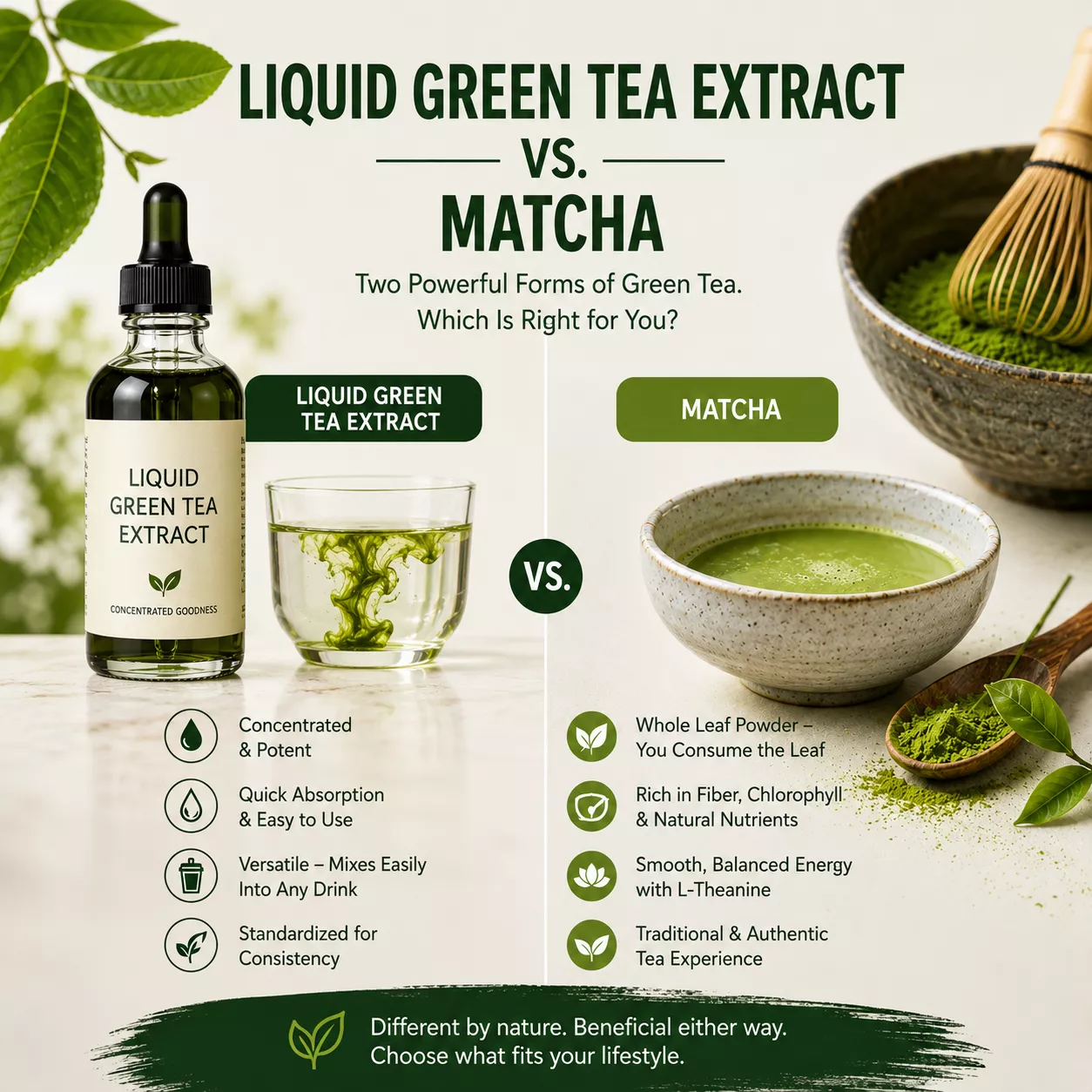
Liquid Green Tea Extract vs. Matcha: Which Has More EGCG?
Both matcha and liquid green tea extract deliver EGCG, the catechin behind green tea’s antioxidant reputation — but they are not equal. A single serving of ChiTea liquid green tea extract provides roughly 12–15 times the antioxidants of one cup of brewed or whisked matcha, with no preparation, no measurable fluoride, and a decaffeinated, solvent-free option that matcha simply can’t match.
If you’re drinking matcha for the health benefits rather than the ritual, the comparison below shows why a standardized liquid extract is often the cleaner, more potent way to get your daily catechins.
Does matcha or liquid green tea extract have more EGCG?
Liquid green tea extract delivers far more EGCG per serving than matcha, because it concentrates the catechins from many grams of leaf into a single dose.
Matcha is whole stone-ground tea leaf, so one cup gives you the catechins naturally present in about a gram or two of powder. A concentrated extract like ChiTea is standardized to 95% polyphenols and condenses the active compounds from far more leaf material — it takes roughly 60 pounds of tea leaves to produce a single pound of finished extract. The result is a serving that delivers the antioxidant equivalent of many cups of tea in a few seconds.
| Feature | Matcha (1 cup) | Liquid Green Tea Extract (ChiTea) |
|---|---|---|
| Antioxidant strength | 1x (single cup) | 12x–15x per serving |
| EGCG standardization | Varies by harvest & grade | Standardized 95% polyphenols |
| Preparation | Whisk 3–5 minutes | 5 seconds — add drops to water |
| Fluoride & heavy metals | Present in whole leaf | 0.00% (lab-verified) |
| Caffeine | ~30–70 mg per cup | Naturally decaffeinated (trace amounts only) |
| Extraction | N/A (whole leaf) | Solvent-free, water-based |
Why does whole-leaf matcha contain fluoride?
Because matcha is the entire ground tea leaf, it carries whatever the plant absorbed from soil and water — including fluoride and heavy metals.
The tea plant (Camellia sinensis) is a known fluoride accumulator, drawing the mineral up from the soil and storing it in its leaves. When you whisk and drink whole-leaf matcha, you consume those compounds along with the catechins. A water-extracted concentrate isolates the beneficial polyphenols while leaving contaminants behind — which is why ChiTea’s lab reports show 0.00% fluoride and pesticide residue. Read more in our guide to fluoride in green tea.
Is liquid green tea extract more bioavailable than matcha?
Yes — a liquid extract is already dissolved, so the catechins are absorbed faster without the digestive steps powders and capsules require.
Bioavailability is how much of a compound your body actually absorbs and uses. With matcha powder or capsules, your body first has to break down plant cellulose or a gelatin shell before the EGCG becomes available. A liquid extract skips that step entirely — the antioxidants enter your system in a form that’s ready to absorb. We break the science down further in the science of liquid bioaccessibility.
Can you get matcha’s benefits without the caffeine or the whisking?
Yes — a decaffeinated liquid extract delivers the same EGCG benefits with none of the jitters or the preparation.
Matcha lovers often cite the calm-energy effect of L-theanine paired with caffeine, but the antioxidant benefits come from the catechins, not the caffeine. A solvent-free, decaffeinated extract gives you the EGCG and polyphenols on their own — ideal if you’re caffeine-sensitive, drinking it in the evening, or simply tired of whisking powder into clumps. Just add a few drops to water, juice, or a smoothie.
Which is the cleaner source of antioxidants?
A standardized, water-extracted liquid concentrate is the cleaner choice for anyone focused on purity and potency over ritual.
Matcha is an excellent whole-food tea with a centuries-old tradition. But if your goal is the highest concentration of clean EGCG per serving — verified free of fluoride, pesticides, and solvents — a lab-tested liquid extract wins on purity and convenience. Explore the evidence in our Research & Science Library, or see the difference for yourself with Ultimate Green Tea extract.
Frequently asked questions
Is liquid green tea extract better than matcha?
For antioxidant potency and purity, yes. A liquid extract delivers 12–15 times the antioxidants of a cup of matcha per serving, is standardized to 95% polyphenols, and is lab-verified free of fluoride and pesticides. Matcha remains a great traditional tea, but the extract is the more concentrated, convenient source of EGCG.
How much EGCG is in matcha versus green tea extract?
A cup of matcha provides the catechins from roughly one to two grams of leaf powder. A concentrated extract condenses the polyphenols from far more leaf — about 60 pounds of leaves yield one pound of extract — so a single serving delivers the antioxidant equivalent of many cups of tea.
Does matcha have fluoride?
Whole-leaf matcha can contain fluoride and heavy metals because the tea plant absorbs them from soil and water and stores them in its leaves. Since you consume the entire ground leaf, those compounds come with it. A water-extracted concentrate isolates the polyphenols and leaves contaminants behind.
Is green tea extract more bioavailable than powder?
A liquid extract is already dissolved, so catechins absorb quickly without your body needing to break down cellulose or a capsule shell first. This makes liquid concentrates one of the most bioavailable forms of EGCG.
Can I take green tea extract without caffeine?
Yes. A decaffeinated, solvent-free liquid extract delivers EGCG and polyphenol benefits without caffeine, making it suitable for evening use or for anyone sensitive to stimulants.
Leave a Reply